Artificial intelligence (AI) is now a core driver of innovation, efficiency, and competitive advantage for businesses of all sizes. As organizations race to adopt AI, one of the most important decisions is whether to use open-source or commercial (proprietary) AI software. Each approach offers unique benefits and challenges, and the right choice depends on your goals, resources, and risk tolerance.
This guide provides a detailed, SEO-optimized comparison of open-source and commercial AI software in 2025, covering features, costs, security, flexibility, and real-world use cases. By the end, you’ll be equipped to make an informed decision for your business or project.
What Is Open-Source AI Software?
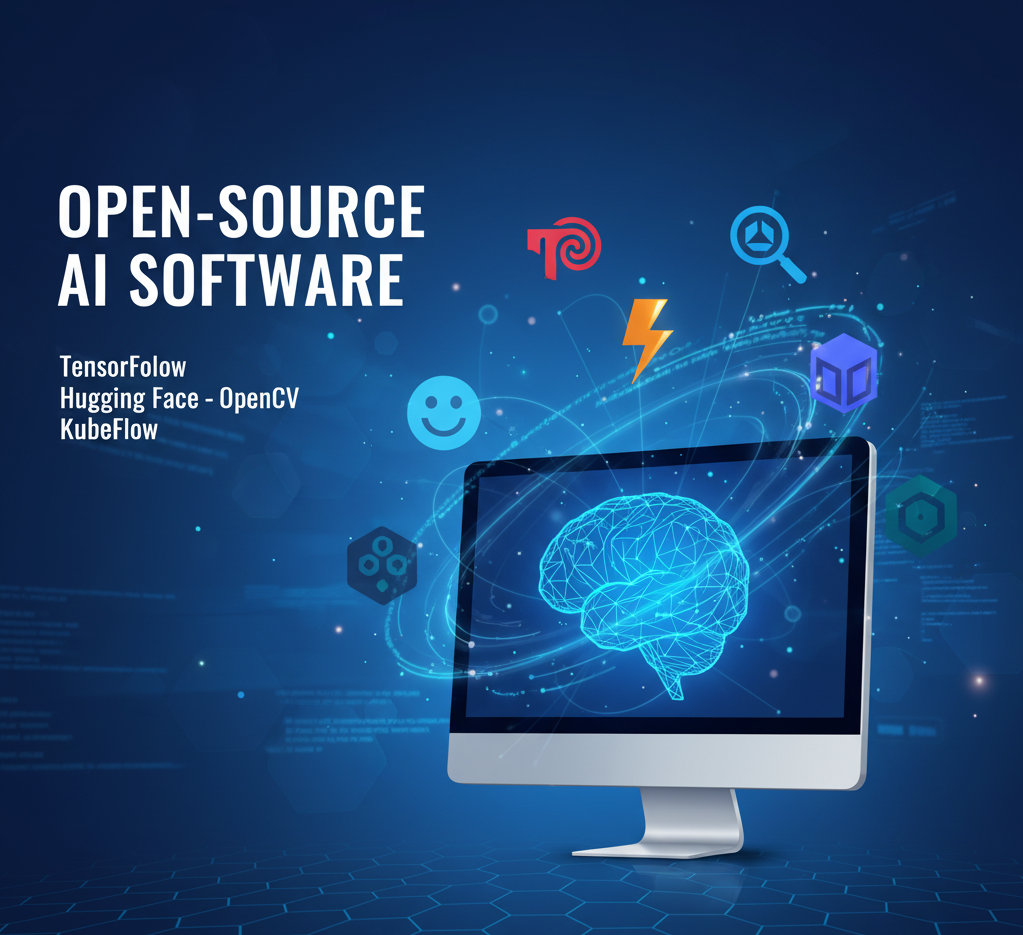
Open-source AI software is built on code, models, and sometimes training data that are freely available to the public under permissive licenses (like MIT, Apache, or GPL). Anyone can use, modify, and redistribute these tools. Popular platforms include TensorFlow, PyTorch, Hugging Face, OpenCV, and KubeFlow.
Key features:
- Full transparency: You can inspect the code, model architecture, and sometimes the training data.
- Customization: Deep control over how the software works, allowing for domain-specific tweaks and private deployments.
- Community-driven: Improvements, bug fixes, and new features are contributed by a global developer community.
- Cost efficiency: No license fees; free to acquire and use.
- Data sovereignty: Models can be run on-premises, keeping sensitive data in-house.
Popular open-source AI tools:
- TensorFlow: Scalable deep learning framework for neural networks, NLP, and computer vision.
- PyTorch: Dynamic computational graph, popular in research and production.
- Hugging Face: Pretrained transformer models for NLP, text classification, translation, and more.
- OpenCV: Real-time image and video processing for computer vision.
- KubeFlow: End-to-end ML pipeline orchestration, Kubernetes-native for scalable deployment.
What Is Commercial (Proprietary) AI Software?
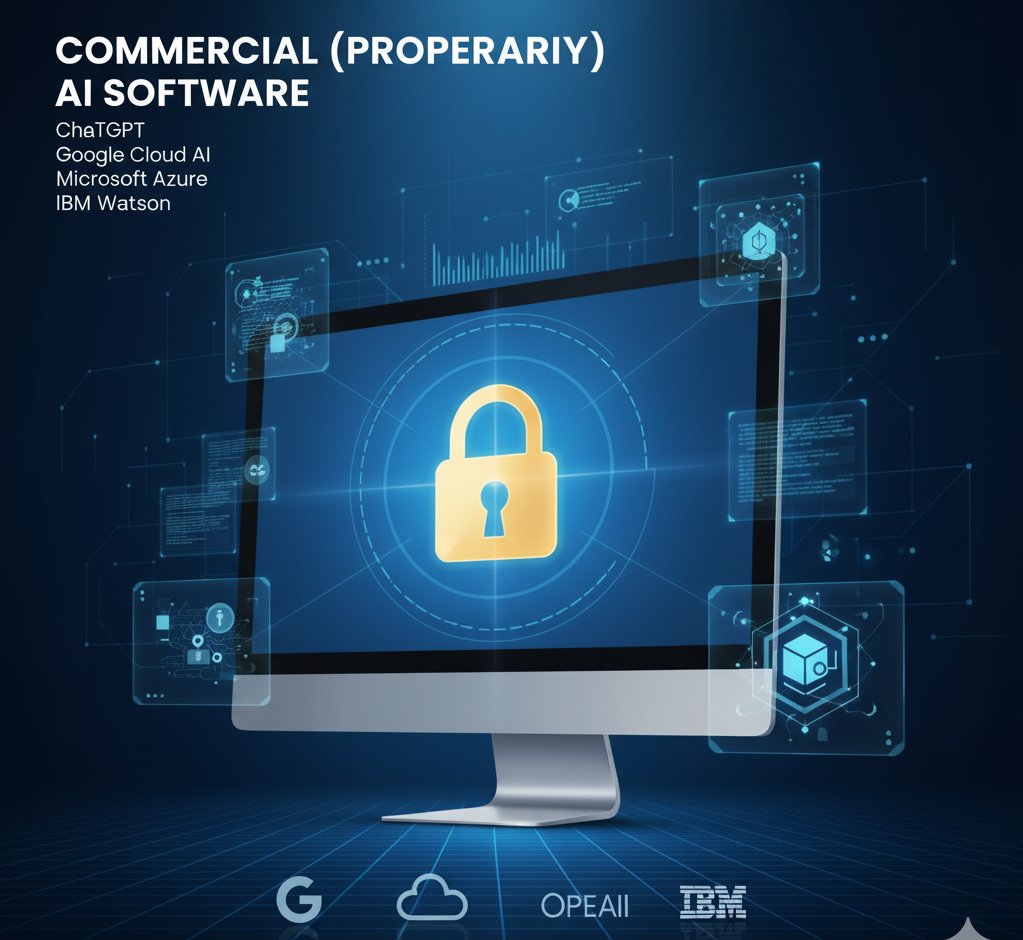
Commercial AI software is developed and maintained by private companies. The code, model weights, and training data are kept secret, and users access the software through paid licenses, subscriptions, or APIs. Examples include OpenAI’s ChatGPT, Google Cloud AI, Microsoft Azure Cognitive Services, and IBM Watson.
Key features:
- Turnkey solutions: Ready to use out of the box, with polished user interfaces and seamless integration.
- Dedicated support: Formal customer service, regular updates, and service-level agreements (SLAs).
- Certified security: Often comes with industry certifications (ISO 27001, SOC 2, HIPAA) and compliance features.
- Optimized performance: Vendors tune models for reliability, speed, and scalability.
- Easy integration: Designed to work smoothly within vendor ecosystems (e.g., Microsoft 365, Salesforce).
Feature Comparison: Open-Source vs. Commercial AI
| Feature | Open-Source AI | Commercial AI |
| Accessibility | Fully accessible, modifiable | Not accessible, closed code |
| Cost | Free to use, modify | Subscription or license fees |
| Customization | Highly customizable | Limited customization |
| Community | Active global developer base | Formal vendor support |
| Transparency | Code and models are auditable | Closed; trust vendor claims |
| Security | User-managed, community patched | Vendor-certified, regular audits |
| Integration | Flexible, but may require effort | Easy within vendor ecosystem |
| Updates | Fast, driven by community | Regular, controlled by vendor |
| Data Control | Full control, on-prem possible | Data often processed by vendor |
| Certification | May lack formal certifications | Often certified for compliance |
| Performance | Depends on user tuning | Optimized for reliability |
| Support | Community forums, documentation | Dedicated support, SLAs |
| Vendor Lock-in | None | Possible, especially with deep integration |
Advantages of Open-Source AI
- Transparency and Trust: Open code allows for audits, bias detection, and compliance with ethical standards. Vulnerabilities are quickly found and patched by the community.
- Flexibility and Customization: Organizations can fine-tune models on proprietary data, adapt architectures, and deploy in private environments—critical for regulated sectors like healthcare and finance.
- Cost Efficiency: No license fees; community support accelerates learning and experimentation. Ideal for startups, research, and budget-conscious teams.
- Innovation at Scale: Rapid improvements and new research are often released in open formats, keeping organizations at the cutting edge.
- Data Sovereignty: Models can run locally, ensuring sensitive data never leaves organizational control.
Challenges of Open-Source AI
- Hidden Costs: Free to acquire, but production-grade deployment requires skilled engineers, infrastructure, and ongoing maintenance.
- Support and Maintenance: Organizations must manage updates, security patches, and troubleshooting themselves, which can strain small or non-technical teams.
- Partial Openness: Some models provide open weights but keep training data proprietary, limiting full transparency.
- Performance and Reliability: May require significant tuning and investment to match the reliability of commercial solutions, especially for real-time applications.
- Compliance Burden: Security and regulatory compliance are the user’s responsibility, which can be complex for industries with strict requirements.
Advantages of Commercial AI
- Turnkey Deployment: Ready to use, with polished interfaces and seamless integration. Ideal for rapid deployment and non-technical users.
- Dedicated Support: Vendors provide formal customer service, regular updates, and guaranteed uptime through SLAs.
- Certified Security and Compliance: Commercial solutions often come with certifications and privacy-preserving techniques, simplifying regulatory approval.
- Optimized Performance: Vendors invest in infrastructure for low latency, high availability, and consistent results—essential for mission-critical applications.
- Reduced Operational Overhead: Vendors handle scaling, patching, and monitoring, freeing organizations from technical burdens.
Challenges of Commercial AI
- Higher Cost: Subscription or license fees can be significant, especially for large-scale or enterprise deployments.
- Limited Customization: Users can configure but not fundamentally alter the underlying models. Customization is often limited to pre-defined parameters.
- Vendor Lock-in: Deep integration with vendor ecosystems can make switching providers difficult and may limit future innovation.
- Less Transparency: Closed codebases can conceal biases or vulnerabilities, and organizations must trust vendors to disclose issues promptly.
- Data Control: Data is often processed in the vendor’s environment, raising concerns for organizations with strict data sovereignty needs.
Use Cases: When to Choose Open-Source vs. Commercial AI
Open-Source AI is best for:
- Research and academia
- Startups and developers with technical expertise
- Custom AI projects needing deep control
- Budget-conscious teams
- Regulated industries requiring data sovereignty
- Organizations prioritizing transparency and innovation
Commercial AI is best for:
- Large enterprises needing rapid deployment
- Mission-critical applications (finance, healthcare, security)
- Non-technical users seeking ease of use
- Regulated industries needing certified compliance
- Businesses prioritizing reliability, support, and reduced operational overhead
Real-World Examples
- Open-Source AI:
- Google, Airbnb, and Twitter use TensorFlow for scalable deep learning.
- Meta, Tesla, and OpenAI (early models) rely on PyTorch for research and production.
- Bloomberg and Amazon use Hugging Face for NLP and transformer models.
- IBM and Toyota leverage OpenCV for computer vision in manufacturing and automotive.
- Cisco and Shopify deploy KubeFlow for ML pipeline orchestration.
- Commercial AI:
- OpenAI’s ChatGPT powers customer service and content generation for enterprises.
- Microsoft Azure Cognitive Services provides turnkey AI for document analysis, speech, and vision.
- Google Cloud AI offers scalable APIs for translation, vision, and natural language processing.
- IBM Watson delivers AI for healthcare, finance, and enterprise analytics.
Security, Compliance, and Data Privacy
- Open-Source AI:
- Full transparency allows for thorough audits and community-led vulnerability fixes.
- Security and compliance are the user’s responsibility; organizations must implement their own controls and monitor for risks.
- On-premises deployment supports data sovereignty, critical for sensitive industries.
- Commercial AI:
- Vendors provide certifications (ISO 27001, SOC 2) and privacy-preserving techniques, simplifying regulatory approval.
- Data is often processed in vendor environments, which may not meet all privacy requirements.
- Closed codebases can conceal vulnerabilities, requiring trust in vendor disclosures.
Cost and Total Cost of Ownership
- Open-Source AI:
- Free to acquire, but costs arise from integration, infrastructure, and ongoing maintenance.
- Skilled engineers are needed for deployment and optimization.
- Long-term savings possible for organizations with in-house expertise.
- Commercial AI:
- Clear subscription or usage fees; vendors handle scaling, patching, and monitoring.
- May be more cost-effective for small teams or rapid deployment needs.
- Higher costs for enterprise-grade features and private deployments.
Customization, Flexibility, and Ecosystem
- Open-Source AI:
- Deep customization for domain-specific needs; models can be re-engineered and integrated across platforms.
- Open ecosystems (Hugging Face, GitHub) encourage innovation and vendor independence.
- Commercial AI:
- Easy configuration but limited fundamental changes to models.
- Deep integration with vendor products streamlines workflows but increases dependence on a single provider.
Final Thoughts and Recommendations
Open-source AI is driving innovation, transparency, and cost savings, making powerful tools accessible to everyone—not just big tech companies. It’s ideal for organizations with technical expertise, a need for deep customization, and a desire for data sovereignty. However, it requires robust internal resources and a commitment to ongoing maintenance and security.
Commercial AI offers speed, dedicated support, and optimized performance, making it perfect for rapid deployment, mission-critical applications, and businesses seeking ease of use and reduced operational overhead. The trade-off is higher cost, less customization, and potential vendor lock-in.
Best practice: Many organizations are now combining open-source and commercial AI, leveraging the flexibility and innovation of open platforms with the reliability and support of proprietary solutions. This hybrid approach accelerates AI adoption while aligning with specific operational needs and long-term vision.
For a curated list of reliable AI software, platforms like GoodFirms and EM360Tech offer expert comparisons, user reviews, and feature breakdowns to help you choose the best solution for your business.